
The Role of Capacitors and Resistors in Filtering Signals
When it comes to electronic circuits, capacitors and resistors play a crucial role in ensuring the smooth flow of signals. These two components, although seemingly simple, are integral in the filtering process of signals. Their ability to store and regulate energy makes them essential in electronic devices such as amplifiers, filters, and power supplies. In this article, we will delve deeper into the role of capacitors and resistors in filtering signals and how they work together to produce clean and reliable signal outputs.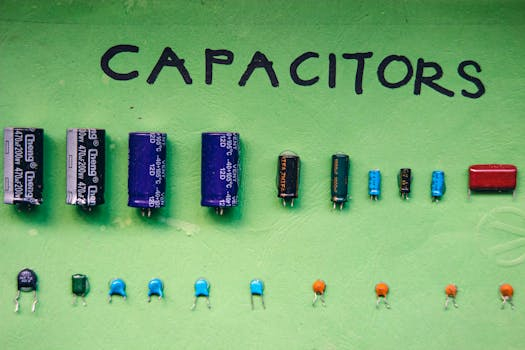
The Basics of Capacitors and Resistors
To understand the role of capacitors and resistors in filtering signals, we must first have a basic understanding of these components. A capacitor is an electrical device that is used to store energy in an electric field. It consists of two conductive plates separated by an insulating material, also known as a dielectric. When a voltage is applied to the capacitor, it charges the plates, storing energy in the form of an electric field. The higher the capacitance, the more energy it can store.
A resistor, on the other hand, is a passive two-terminal electrical component that resists the flow of current. It is made of a resistive material that limits the flow of electrons, thereby reducing the voltage in a circuit. The higher the resistance, the more it restricts the flow of current. Resistors are commonly used to control the amount of current flowing in a circuit or to dissipate heat generated by other components.
The Role of Capacitors in Filtering Signals
High-Pass Filters
One of the main uses of capacitors in signal filtering is in high-pass filters. These filters allow high-frequency signals to pass through while blocking low-frequency signals. The capacitor works together with a resistor to create a voltage divider, where the voltage across the capacitor decreases as the frequency of the signal increases. This results in a smooth transition from the input signal to the output signal, effectively filtering out low-frequency signals.
Low-Pass Filters
In contrast, low-pass filters allow low-frequency signals to pass through while blocking high-frequency signals. In this type of filter, the capacitor is placed in parallel with the resistor, creating a high impedance path for high-frequency signals. This means that high-frequency signals will flow through the capacitor instead of the resistor, resulting in a smooth transition from high to low frequencies.
Band-Pass Filters
Certain applications require the filtering of a specific frequency range. This is where a band-pass filter comes in, which allows a specific range or “band” of frequencies to pass through. Capacitors are used in combination with inductors and resistors to create a band-pass filter. The capacitor, in this case, acts as a tuning element, allowing the filter to be adjusted for the desired frequency range.
The Role of Resistors in Filtering Signals
Load Resistors
One of the main functions of resistors in signal filtering is to act as load resistors. These resistors are placed in a circuit to simulate a load on the signal source, ensuring that the output signal does not exceed a certain voltage level. This is particularly important in amplifier circuits, where the signal must be amplified without distortion. Load resistors, in this case, prevent the amplifier from saturating and producing a distorted output signal.
Feedback Resistors
In amplifier circuits, feedback resistors are also used to control the amplifier’s gain and frequency response, thereby improving the quality of the output signal. A feedback resistor is placed in parallel with the input signal at a specific point in the circuit. This resistor acts as a feedback mechanism, controlling the amplifier’s output and ensuring that the desired signal is produced.
Pull-up and Pull-down Resistors
Resistors are also commonly used in digital circuits to prevent “floating” inputs, which can cause unreliable or erroneous signals. Pull-up and pull-down resistors are used to ensure that digital inputs are either at a high or low voltage state, respectively. This improves the reliability and accuracy of the output signal in digital circuits.
In Conclusion
In conclusion, capacitors and resistors are vital components when it comes to filtering signals in electronic circuits. Their unique properties and ability to work together make them essential in producing clean and reliable signal outputs. Whether it is in high-pass, low-pass, or band-pass filters, or in amplifier and digital circuits, capacitors and resistors are crucial in ensuring the smooth flow of signals and improving the overall quality of electronic devices.